Enjoy Vermont's Summer, Safely
Warm weather means more time hiking, swimming, cooking out, and gardening outside.
Find tips below to help prevent common summer health risks.
If you're a camp administrator, there's information just for you to help prepare and respond to the health risks that can arise in camp settings.
Heat, Water, Sun & Air
Heat waves are becoming more common and severe in Vermont, increasing the risk of heat exhaustion and heat stroke. Extreme heat can also make chronic conditions like diabetes, heart disease, and asthma worse.
Older adults, young children, outdoor workers, people with chronic conditions, and people without access to air conditioning are at higher risk.
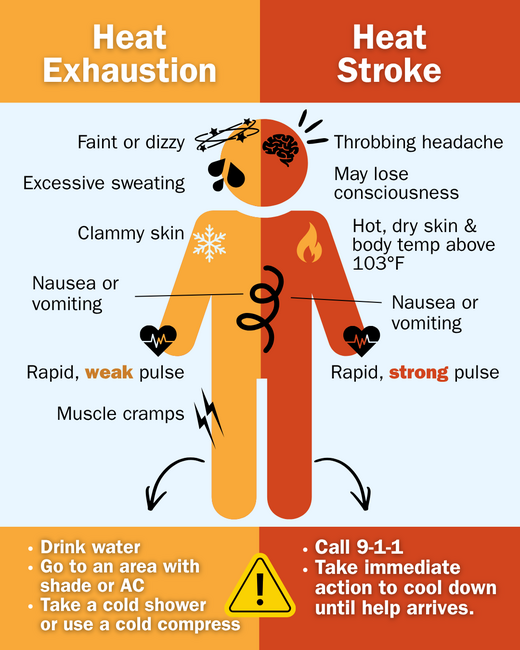
To stay safe:
- Drink extra water and avoid drinks with alcohol and caffeine.
- Limit strenuous outdoor activities.
- Stay indoors or in the shade during the hottest parts of the day.
- Take breaks in cool indoor locations.
- Check on neighbors or loved ones, especially if they are older, have chronic conditions, or don't have air conditioning.
- Know the signs of heat-related illness and act quickly if symptoms develop.
Vermont’s swimming holes, lakes, and rivers are popular spots to cool off in summer. But it’s important to be aware of changing water conditions, cold water, and harmful algae blooms before diving in. To protect yourself and others:
- Check for cyanobacteria (blue-green algae) before swimming.
- Avoid swallowing water and stay out of the water when sick with diarrhea.
- Keep a close eye on children around water. Slips, falls and drowning can happen silently in a matter of seconds. Children should learn to never swim alone or without adult supervision.
- Watch the weather closely. Check the forecast and look for signs of changing weather, like dark storm clouds or strong winds.
Find swimming lessons near you at American Red Cross
Learn more about swimming hole and water safety
Although Vermont has fewer sunny days than most states, we have the third highest rate of skin cancer in the country. It's important to protect yourself outside, even on cloudy days, since the clouds don’t block the sun’s harmful rays.
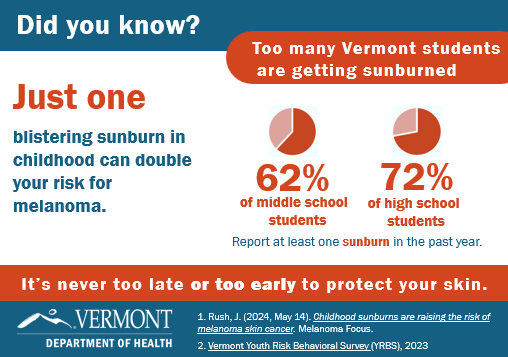
- Apply a thick layer of sunscreen with SPF 30 or higher every two hours.
- Reapply sunscreen after swimming or sweating.
- Seek shade, especially during the middle of the day when the sun is strongest.
- Wear sunglasses, a wide-brimmed hat, and clothing that covers your skin when possible.
- Avoid tanning outside or indoors.
Wildfire smoke is becoming a more common part of Vermont summers. Poor air quality from wildfires or other pollution can irritate the lungs and worsen breathing conditions like asthma. It can be especially dangerous for those who are highly affected by air pollution, like people with heart or lung disease, older adults and children. To help stay safe:
- Stay informed by signing up for air quality alerts or checking the air quality forecast.
- Know your health risk and pay attention to your symptoms.
- Limit or modify your outdoor activities if you are having symptoms.
- Keep your indoor air clean when air quality is poor — like closing windows and doors, setting your air conditioning to recirculate when it's hot, and using an air purifier or creating your own air cleaner.
Find out more tips on how to stay safe and how to sign up for alerts
Outdoors: Food, Plants, Bugs & Wildlife
Summer cookouts, picnics, and camping trips can increase the risk of food poisoning, when food is left out for too long. This is because warmer weather allows bacteria to grow quickly in food. To reduce the risk of food poisoning:
- Keep hot foods hot and cold foods cold.
- Wash hands, utensils, and surfaces often.
- Cook foods to safe temperatures.
- Refrigerate leftovers within two hours, or within one hour, if food is in temperatures above 90°F, like in a hot car.
Poisonous plants like poison ivy, giant hogweed, and wild parsnip are common in summer and can cause painful rashes, burns, or other skin reactions. Other common plants can be toxic to people and pets if eaten. It's important to recognize poisonous plants and know how to avoid them.
Ticks are common in Vermont and can spread Lyme and other diseases. They live in wooded, grassy, and brushy areas.
- Use bug spray and wear protective clothing when outdoors. This will also help protect against mosquitoes, which can also spread disease.
- Check yourself, children, and pets for ticks after spending time outside.
- Shower soon after being outdoors to help wash off unattached ticks.
See more tips for preventing tick bites and mosquito bites.
Rabies is a deadly virus that affects the brain and nervous system. It spreads through bites or saliva from infected animals. In Vermont, bats are the most common cause of human rabies exposure. Rabies is also common in raccoons, skunks, and foxes.
- Call the Vermont Rabies Hotline (1-800-4-RABIES) if you see a sick or strangely behaving animal, or wake up to a bat in your sleeping area.
- Do not touch or handle wild or stray animals, including young mammals.
- Make sure pets are up to date on rabies vaccination.
- Keep pets indoors at night and supervise them when outside.
Before Camp & Travel
Summer camps and travel can increase exposure to contagious diseases, making it important to stay up to date on recommended vaccines before summer activities.
Check with your healthcare provider to make sure you and your family are up to date. You can also order vaccination records from the Health Department.