When to Treat Your Drinking Water

ENV_DW-treatment.jpg

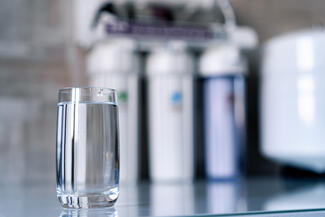
If your drinking water test results show contaminants above recommended levels, you may need to take steps to reduce them. Treatment can also help with problems such as bad taste, odor or color.

The right approach depends on your test results and other characteristics of your water. You may need to address the source of contamination, disinfect your well or plumbing, or install a water treatment system.


Treatment at a Glance

Before choosing a treatment system, make sure you understand your water quality and what needs to be treated.

  1. Identify which contaminants you need to treat. Complete the recommended drinking water testing. Review all your results together. Look for contaminants above recommended levels.
  2. Identify which treatment options may work. You may need more than one treatment system. Some contaminants can also affect how well a system works to treat other contaminants.
  3. Compare treatment options and costs. Ask more than one water treatment specialist for recommendations and estimates. Ask about installation and ongoing maintenance costs.
  4. Plan for maintenance and retesting. Follow the manufacturer's or specialist's instructions to maintain your system. Test your water again after installation to make sure the contaminants are being removed.

Types of Treatment Systems

Treatment systems generally fall into two categories. The best choice depends on the contaminants in your water, the treatment needed, and your household's needs.

Single-tap systems (point-of-use or POU)

  • These systems treat water at one faucet, usually the kitchen sink. They are often used to treat water for drinking and cooking.

Whole-house systems (point-of-entry or POET)

  • These systems are installed where water enters your home. They treat all the water in your home, including your shower.

Treatment System Options

Make sure you have all your water test results before choosing a treatment system. We recommend working with a water treatment specialist to install your system. The information in this section can help you understand what your options are. If you have questions, please contact us.

Use the water treatment table below to find options based on your water test results. 

Quick Tip

Look for a certified treatment system

Water Treatment Table

Watch the water treatment table tutorial video to help you understand how to use the table.

Water treatment table

View in Full Screen


Maintaining Your Water Treatment System

A treatment system only works if it's maintained properly. Depending on the system, you may need to:

  • Replace filters or other parts.
  • Clean or replace UV bulbs.
  • Add salt or other treatment materials. 
  • Check the system regularly. 

Before buying a system, ask the water treatment specialist for an estimate of ongoing maintenance and replacement costs.


Retesting Your Water

After installing a treatment system, test your water again to make sure the system is working to reduce the contaminant.

You usually only need to retest for the contaminant the system was installed to treat. You do not need to repeat the entire Homeowner Testing Package if you have already completed the recommended testing.

Follow the steps for testing your drinking water


Treatment System Guide

This section provides a quick reference to common treatment systems. Use them to understand what each system may treat, where it is usually installed, and what to consider when comparing options.

The best system for your home depends on your test results and water quality. Always check that the specific product is certified to reduce the contaminant you need to treat.

Adsorptive media
  • What it can treat: Adsorptive media systems may be used to reduce arsenic and fluoride, and certain systems are designed for other contaminants.
  • Where it's installed: Typically a whole-house system
  • Things to consider: Choose media designed for the contaminant you need to remove. Ask a water treatment specialist whether pretreatment is needed.
  • Certification: For health-related contaminants, look for NSF/ANSI Standard 53 or Water Quality Association Gold Seal.
Aeration
  • What it can treat: Aeration systems can reduce certain gases, including radon and hydrogen sulfide. They may also be used with filtration to treat iron or manganese.
  • Where it's installed: Typically a whole-house system
  • Things to consider: Aeration may need to be combined with filtration to remove particles formed during treatment. The appropriate system depends on your water quality.
  • Certification: There is no specific certification to look for.
Anion exchange
  • What it can treat: Anion exchange systems are commonly used to reduce nitrate. They may also treat uranium, fluoride and other contaminants.
  • Where it's installed: Typically a whole-house system
  • Things to consider: Anion exchange lowers pH, which can make water more corrosive to metal plumbing and fixtures. You may also need a neutralizing system. Iron and sediment may also require pretreatment.
  • Certification: Look for NSF/ANSI Standard 53 or Water Quality Association Gold Seal for the specific contaminant.
Carbon filtration
  • What it can treat: Carbon filters can help reduce certain contaminants and improve taste or odor. Some certified systems can reduce PFAS.
  • Where it's installed: It can be a single-tap or whole-house system, depending on the system.
  • Things to consider: Filter life varies by system and water quality. Filters must be replaced as directed. For PFAS, look for a product that specifically claims to remove PFOA/PFOS. Carbon filters can concentrate radon, so test for radioactive elements before installing carbon treatment on a private well or spring.
  • Certification: Look for NSF/ANSI Standard 42 or 53, as applicable, or Water Quality Association Gold Seal. For PFAS, make sure the certification specifically covers PFOA/PFOS removal.
Chemical oxidation and filtration
  • What it can treat: These systems may be used to treat iron and manganese.
  • Where it's installed: Typically a whole-house system
  • Things to consider: Some systems use chemicals that require careful handling, monitoring and maintenance. The type of system depends on the contaminant level and other water conditions.
  • Certification: Look for NSF/ANSI Standard 42 or 53, as applicable, or Water Quality Association Gold Seal for the specific treatment.
Chlorination (continuous)
  • What it can treat: Continuous chlorination is a permanent treatment option for some ongoing bacterial contamination problems.
  • Where it's installed: Typically as a whole-house system
  • Things to consider: The system must be properly installed, monitored and maintained. Work with a qualified water treatment specialist to determine whether this is appropriate for your water.
  • Certification: Check the system specifications and applicable certifications with the installer.
Chlorination (shock)
  • What it can treat: Shock chlorination disinfects a well and water system after repairs or when bacteria are detected.
  • Where it's used: In the well and plumbing system.
  • Things to consider: Shock chlorination is not a permanent solution for recurring bacterial contamination. Identify and address the source of the problem, then retest your water.

Learn how to disinfect your drinking water

Distillation
  • What it can treat: Distillation units can treat many inorganic contaminants.
  • Where it's installed: Typically a single-tap system installed at or under the kitchen sink.
  • Things to consider: Some contaminants may require pretreatment. Distillation uses energy to heat water and produce steam.
  • Certification: Look for NSF/ANSI Standard 62 or Water Quality Association Gold Seal for the specific contaminant.
Flushing
  • What it can treat: Flushing may temporarily lower lead or copper levels when water has been sitting in plumbing. If water has been sitting in pipes for more than six hours, let the cold water run until it is as cold as it can get.
  • Where it's used: At the affected faucet.
  • Things to consider: Flushing is a temporary measure, not a permanent solution.  Test the water after flushing to confirm whether it lowers lead or copper levels.
Neutralization
  • What it can treat: Neutralizing systems make water less acidic and less likely to dissolve lead or copper from plumbing.
  • Where it's installed: Typically a whole-house system
  • Things to consider: You may need neutralization after some reverse osmosis or anion exchange systems. It can reduce the amount of lead or copper that leaches from plumbing, but there may be other steps involved.
Oxidizing filtration media
  • What it can treat: Oxidizing filtration media may be used to reduce iron or manganese.
  • Where it's installed: Typically a whole-house system
  • Things to consider: Treatment depends on water chemistry, the contaminant level and other conditions. Pretreatment may be needed.
  • Certification: Look for NSF/ANSI Standard 42 or 53, as applicable, or Water Quality Association Gold Seal.
Plumbing and fixture replacement
  • What it can treat: Replacing old plumbing or fixtures can help reduce lead or copper entering your drinking water.
  • Where it's used: At the affected pipes, fixtures and fittings.
  • Things to consider: Choose replacement materials that meet applicable lead-free requirements. Clean faucet aerators and flush the plumbing after replacement to remove particles that may have been dislodged.
  • Certification: Choose fixtures and plumbing components that meet applicable lead-free certification standards.
Reverse osmosis
  • What it can treat: Reverse osmosis systems can reduce several contaminants, including arsenic, fluoride, gross alpha radiation, copper, uranium, lead and nitrate, depending on the specific product.
  • Where it's installed: Typically a single-tap system installed as a separate tap at or near the kitchen sink. Can be installed as a whole-house system, but uses a significant amount of water.
  • Things to consider: Hard water can cause scale buildup on the membrane, so you may need a water softener or other pretreatment. Reverse osmosis also wastes some water. Check the manufacturer's instructions for the hardness level and any other pretreatment requirements.
  • Certification: Look for NSF/ANSI Standard 58 or Water Quality Association Gold Seal for the specific contaminant.
Sediment filtration
  • What it can treat: Sediment filters can remove particles from water and may help as pretreatment for other systems.
  • Where it's installed: Depends on the system and the water quality issue.
  • Things to consider: Sediment filtration does not remove dissolved contaminants. A sediment filter alone will not remove lead. The micron rating determines the size of particles a filter can capture. Filters generally work best when used in a series, starting with a 25-micron filter and progressing to a 5-micron filter.
  • Certification: Check the product specifications and any certification claims for the intended use.
Ultraviolet (UV) light
  • What it can treat: UV systems disinfect water by treating microorganisms, including bacteria and other pathogens.
  • Where it's installed: Typically as a whole-house system
  • Things to consider: Water quality issues such as sediment, turbidity, scaling and tannins can interfere with UV treatment. You may need pretreatment. Follow the manufacturer's instructions for cleaning and replacing UV bulbs.
  • Certification: Look for NSF/ANSI Standard 55 or Water Quality Association Gold Seal.
Water softener
  • What it can treat: Water softeners are mainly used to treat hardness. They can also reduce certain levels of iron, manganese and radium.
  • Where it's installed: Typically as a whole-house system
  • Things to consider: Conventional water softeners exchange contaminants for sodium or potassium, which remains in the water. Consider the added sodium or potassium if you follow a restricted diet. You may need to install a water softener as a pretreatment for other treatment systems.
  • Certification: Look for NSF/ANSI Standard 44. Consider an on-demand regeneration system instead of a timer-based system.

Contact Us

Private Drinking Water Program

Phone: 802-489-7339

Email: [email protected]

Last Updated: