Protect Public Health at Recreational Swimming Sites
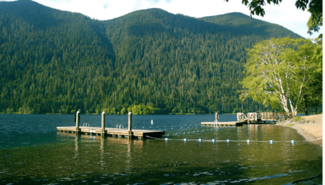
Whether you manage a beach or operate a pool, this page provides the guidance and resources you need to keep your site operating safely for visitors.
Whether you manage a beach or operate a pool, this page provides the guidance and resources you need to keep your site operating safely for visitors.
Help keep swimmers safe by checking water conditions, testing for bacteria, and letting visitors know when it isn't safe to swim.
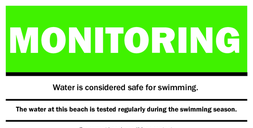
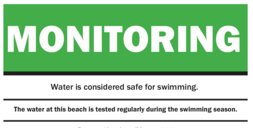
A healthy swimming area is monitored throughout the swimming season for conditions that could affect public health.
Watch for common hazards, including:
Complete a sanitary survey before the swimming season begins and whenever conditions change, such as after flooding, construction or other major events. A sanitary survey helps identify and track potential sources of contamination over time.
Test for E. coli bacteria at least once a week during the swimming season and:
Why test for E. coli? E. coli is used to show whether fecal contamination may be present in the water. High E. coli levels may mean other germs that can make people sick are also present.
See sampling protocols
Order swim water test kits
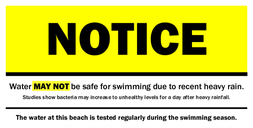
Post an advisory when:
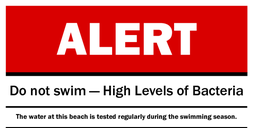
Close the swimming area when:
Notify your staff and town health officer when a swimming area is closed because of poor water quality or another health hazard.
See posting and closing procedures
You can reopen the swimming area when:
If you manage a pool, hot tub, splash pad or other recreational swimming facility:

Beach Red Sign (Do Not Swim) in: العربية (Arabic) မြန်မာစာ (Burmese) دری (Dari) English Français (French) Kirundi नेपाली (Nepali) پښتو (Pashto) Soomaali (Somali) Español (Spanish)
Beach Yellow Sign (Water May Not be Safe) in: العربية (Arabic) မြန်မာစာ (Burmese) دری (Dari) English Français (French) Kirundi नेपाली (Nepali) پښتو (Pashto) Soomaali (Somali) Español (Spanish)
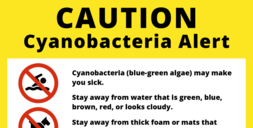
Cyanobacteria Yellow Sign (Caution) in: العربية (Arabic) Bosnian မြန်မာစာ (Burmese) دری (Dari) English Français (French) Kirundi नेपाली (Nepali) پښتو (Pashto) Soomaali (Somali) Español (Spanish) Kiswahili (Swahili) Tiếng Việt (Vietnamese)
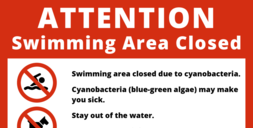
Cyanobacteria Red Sign (Swimming Area Closed) in: العربية (Arabic) Bosnian မြန်မာစာ (Burmese) دری (Dari) English Français (French) Kirundi नेपाली (Nepali) پښتو (Pashto) Soomaali (Somali) Español (Spanish) Kiswahili (Swahili) Tiếng Việt (Vietnamese)