
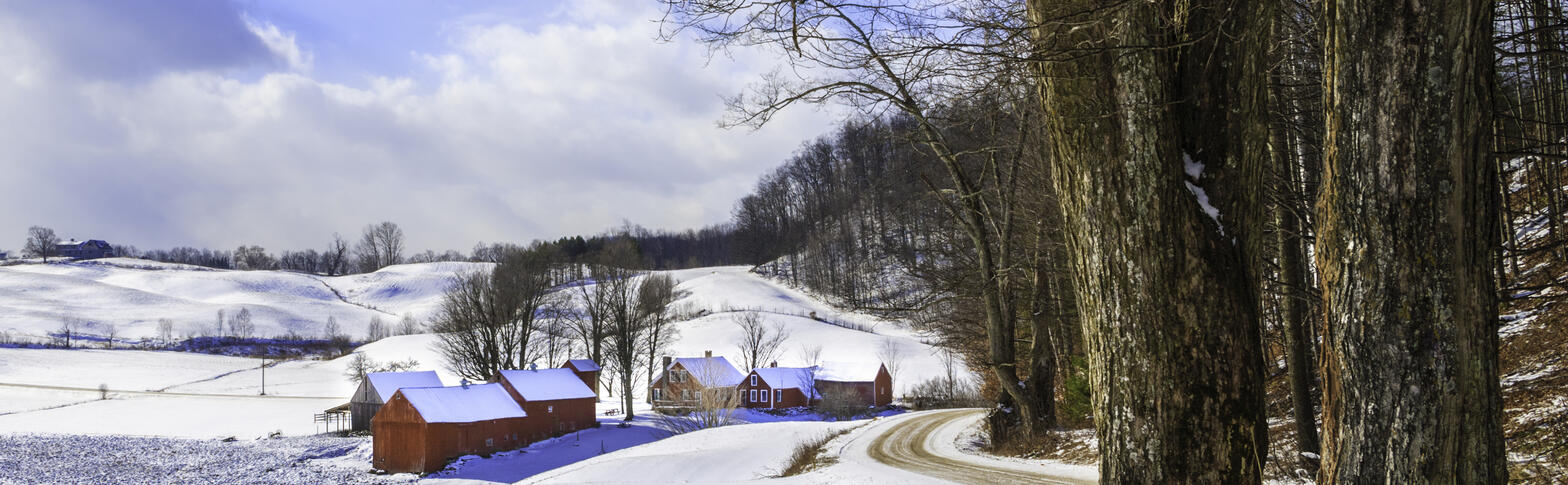
Winter Weather Can Affect Your Health
Whether you love spending Vermont winters outside or prefer to hibernate, winter weather can pose health risks. It’s important to take extra precautions like installing carbon monoxide detectors and wearing extra layers to prevent frostbite. Be sure to stay safe and warm this winter by following the tips below.
Staying safe outdoors
- Stay inside when temperatures are dangerously cold. If you need a place to stay, find a warming shelter near you.
- When outside, cover your skin, wear layers and limit time outside to prevent frostbite and hypothermia.
- Prevent falls on ice by clearing snow from steps and walkways before it has a chance to melt and re-freeze. Use rock salt or another de-icing chemical to melt ice and try sprinkling sand or wood ash over ice to lower the risk of slipping. You may not always be able to see ice when walking. If possible, wear shoes that provide good traction and insulation with rubber treads. Walk like a penguin! Slightly bend your knees, take short steps, and walk slowly.
- Older adults, individuals with pre-existing heart conditions, and people who are usually sedentary are all at higher risk for a heart attack while shoveling snow. Follow tips to stay safe while shoveling.
Lake and pond safety
Warming temperatures due to climate change are making it less likely for ponds and lakes to be covered by ice. Even when there is cover, the ice is often thin and unstable. For 100 years (1851-1950), Lake Champlain completely froze over every year except for four. Since 2008, Lake Champlain has only completely frozen over three times.
A fall through ice can result in severe, or fatal, hypothermia or drowning. In fact, several Vermonters have died in recent years after falling through the ice while fishing, walking, snowmobiling or driving a vehicle over a lake or pond. Even if you have driven and walked over a frozen water body for many years, be sure to take caution and watch for thin ice.
Learn more about ice safety from the Department of Fish & Wildlife
Road safety and driving conditions
Winter road conditions can be hazardous at times in Vermont. Make sure your vehicle is ready for winter, including snow tires, an ice scraper and an emergency kit. Pay attention to news and weather reports before heading out, and check road conditions at 511vt.com.
When you have to be on the road during wintry weather, be careful. Drive slowly and brake gently on snowy and icy roads. Visit the Vermont Agency of Transportation's Winter Weather Central web page for up-to-date road and travel information.
If you need to warm up your car, do it outside of a garage and in the open air to prevent carbon monoxide poisoning.
More winter driving safety tips from the Vermont State Police
Staying safe at home
Carbon monoxide
| Since we spend more time cozying up indoors, it’s important to make sure the air in our home is healthy to breathe in.
|
Wood smoke
Breathing in wood smoke can cause lung and eye irritation, asthma attacks and other respiratory issues. Over time, it can affect your lung function, lead to chronic bronchitis, heart conditions and even premature death.
Babies and children, older adults and adults with existing heart or lung conditions are most affected by wood smoke.
To protect your health from wood smoke:
- Improve ventilation and air filtration if possible.
- Install air purifiers with high efficiency particulate (HEPA) filters, or build your own using a box fan and air filter.
- Use an indoor air monitor. It can help alert you to activities that worsen air quality. Many options are available for $50 to $200.
- When outdoor air quality is poor, reduce outdoor activity and unnecessary wood burning. Check the air quality in your area with AirNow and sign up for alerts with EnviroFlash.

Housing and fuel assistance are available to help you.
Living in a cold home can increase your risk for heart and respiratory diseases, make arthritis worse, and increase stress and depression. Older adults and babies tend to suffer most in a cold home. If you need assistance with your fuel costs, weatherization services for your home, or help finding housing this winter, please contact Vermont 2-1-1.
Power outages during storms
During a winter storm, it can be cold, windy and snowy. A winter storm can last from a few hours to several days. Listen to the news for information, and stay at home if you can.
See more winter weather safety tips
If the power goes out during a winter storm, you may be without power for a few hours or several days after the storm. Be prepared.
- Make sure you have enough food and water.
- Keep your refrigerator and freezer closed to keep food cold.
- Have flashlights ready and extra batteries.
- Run generators outside to prevent carbon monoxide poisoning.
- Charge your cell phone fully.

Translated Information
Winter Storm Facts in: العربية (Arabic) မြန်မာစာ (Burmese) 中文 (Chinese) English Français (French) नेपाली (Nepali) Russian Serbo-Croatian Soomali (Somali) Español (Spanish) Kiswahili (Swahili) Tiếng Việt (Vietnamese)
How to Stay Safe in the Very Cold Weather (video) in: العربية (Arabic) မြန်မာစာ (Burmese) English Français (French) Kirundi Mandarin नेपाली (Nepali) Español (Spanish) Ukranian Tiếng Việt (Vietnamese)
If the Electricity Stops Working in: العربية (Arabic) မြန်မာစာ (Burmese) 中文 (Chinese) English Français (French) नेपाली (Nepali) Russian Serbo-Croatian Soomali (Somali) Español (Spanish) Kiswahili (Swahili) Tiếng Việt (Vietnamese)
Carbon Monoxide and Generator Safety in: العربية (Arabic) မြန်မာစာ (Burmese) 中文 (Chinese) English Français (French) Kirundi नेपाली (Nepali) Soomali (Somali) Español (Spanish)