Why IRC Practices are Required in Vermont

Lead is a highly toxic metal. It was commonly used in paint, stain and other surface coatings in buildings built before 1978. Dust from lead-based paint (including stains and other surface coatings) is the major source of lead poisoning among children.

There is no safe level of lead in the body. Too much lead, or lead poisoning, can cause serious and permanent health problems for anyone. Babies, young children and pregnant people are at special risk. Lead poisoning can be prevented.

To help prevent lead poisoning, Vermont law requires owners of rental housing and child care facilities built before 1978 to perform Inspection, Repair and Cleaning (IRC) Practices and to file a compliance statement each year. 

Did you know?
What are IRC Practices?

IRC Practices are required for rental housing and child care facilities built before 1978. An IRC-certified person must:

  • Inspect for chipping and peeling paint, and pick up any paint chips from the property grounds.
    • Block access immediately to any areas that need paint repair.
    • Have repairs done by Lead-Safe RRPM licensed workers within 30 days of finding out about them.
  • Confirm window well inserts are installed in all pre-1978 wooden sash windows.
  • Perform a specialized cleaning in common areas, and when there is a new tenant.
  • Give new tenants the Protect Your Family from Lead in Your Home pamphlet, if you are a landlord. If you are a child care owner, post the pamphlet in your facility and give it to parents or caregivers if requested.
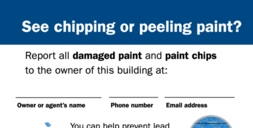
  • Make sure a notice to occupants is posted in a prominent place – in either a common area or in each unit – asking occupants to report deteriorated paint to the building owner.
  • Submit a compliance statement every year after the work is completed.
  • Give a copy of the compliance statement to:
    • Your tenants and insurance carrier, if you are a landlord.
    • The Department for Children and Families, your insurance carrier, and the child care provider at your facility, if you are a child care owner. 

Step-by-Step Guide: How to Comply with IRC Practices

Step 1: Become IRC Practices certified or hire someone who is

Only a certified person can perform IRC Practices on your property. We recommend that landlords and child care owners become certified. 

How to become IRC Practices certified:

  • Take an IRC Practices training course approved by the Health Department. 
  • Pass the test with a score of 70% or higher.
  • Get your certificate via email within two weeks of the training date.

Once certified, you can perform the IRC Practices for your rental property or child care facility.

IRC Practices certificates are valid for five years. You must take the IRC Practices training course again to renew your certificate. The appeal process for a certification decision is in the Statement of Procedural Rights.

Find out how to sign up for a training course

If you don’t want to or can’t become certified, then you can hire someone who is. Look up a Vermont-licensed Lead-Safe RRPM Firm that performs IRC Practices.

Step 2: Perform IRC Practices each year
  • Inspect for chipping and peeling paint or coatings, and pick up any paint chips from the property grounds.
  • Block access immediately to any areas that need paint repair.
  • Have repairs done by Lead-Safe RRPM licensed workers within 30 days of finding out about them.
  • Confirm window well inserts are installed in all pre-1978 wooden sash windows.
  • Perform a specialized cleaning in common areas, and when there is a new tenant.
  • Give new tenants the Protect Your Family from Lead in Your Home pamphlet, if you are a landlord. If you are a child care owner, post the pamphlet in your facility and give it to parents or caregivers if requested.
  • Make sure a notice to occupants is posted in a prominent place – in either a common area or in each unit – asking occupants to report deteriorated paint to the building owner.

If you are a landlord, you are also required to give your tenants this information before their lease starts:

  • A copy of the rental unit’s most recent IRC Practices compliance statement
  • Any known information about lead-based paint and lead-based paint hazards
Step 3: Make sure lead-safe repairs are made

If you find chipping or peeling paint or stain that is more than 1 square foot total per interior room or exterior side of the building, a Lead-Safe RRPM licensed worker must make the repairs.

  • If you hire a contractor, they must have the Vermont Lead-Safe Renovation, Repair, Painting and Maintenance (RRPM) Firm and Supervisor licenses. Find a contractor

  • If you are a landlord, you can do the work yourself if you have a Lead-Safe RRPM Firm – Landlord license or the RRPM Firm and Supervisor licenses. Find out how to get licensed

  • If you are a child care owner, you can apply for an Uncompensated Child Care Operator (UCCO) certificate to do repairs work at your facility only. Find out how to get certified

Step 4: Submit your annual IRC Practices compliance statement

After you have inspected your property and made any repairs, you need to submit a compliance statement through the Health Department’s online system. Read the step-by-step instructions and frequently asked questions about how to submit your compliance statement. 

  • If you are a landlord, give a copy of the IRC Practices compliance statement to your tenants and insurance carrier.
  • If you are a child care owner, give a copy of the IRC Practices compliance statement to the Department for Children and Families, your insurance carrier, and the child care provider at your facility.
Step 5: Stay in compliance

Vermont law requires you to perform IRC Practices and submit a compliance statement each year. You may be fined if you do not submit a compliance statement, or if you submit a false statement. To avoid fines, make sure you are honest when you submit your statement and submit it on time. 
How to Request Vermont Lead Regulation Exemption Status

If you own a home, rental property or child care facility built before 1978, you may be eligible for a building exemption only if a Vermont-licensed lead inspector finds that the building does not have lead-based paint

A building exemption approved by the Health Department means you will be exempt from the Vermont Regulations for Lead Control. You will not be required to perform IRC Practices, file an annual IRC Practices compliance statement, follow RRPM work practices, or avoid the prohibited work practices when working on the building.

The Health Department approves both partial and full building exemptions for buildings built before 1978. For a partial exemption, you must comply with the lead regulations on the parts of the building that did not receive an exemption.

Step 1. Hire a Vermont-licensed lead consulting company

To begin the exemption process, you must hire a Vermont-licensed Lead Consulting Company. These companies employ certified Lead Inspectors and Risk Assessors who will:

  • Identify which surfaces must be tested
  • Use an XRF analyzer and/or submit paint chip samples for lab analysis
  • Prepare the required Lead Inspection Report

Search for a licensed consulting company

To look up a licensed lead contractor in the public portal, go to “Type” and select “Company” or “RRPM Firm.” Then under “License Type,” choose “Lead Consultant Company.” 

Step 2: Ask the company to submit your application

Once the inspection report is complete, the consulting company must submit a Lead Regulation Building Exemption Application to the Health Department on your behalf.

Be sure to let the company know you are seeking a "Vermont lead regulation exemption," and ask them to submit the exemption application. 

Step 3. Wait for review

If your building qualifies for an exemption, you’ll receive a letter from the Health Department confirming whether all or part of your building is exempt from Vermont’s lead regulations. Keep this letter in your records, and pass it on to any lessee or buyer of the building.  

FAQs for Landlords/Property Management Companies and Child Care Owners

I need to request an extension for my IRC Practices. What do I need to do?

If you need to make repairs and can’t meet the filing deadline, you must request an extension.

To request an extension, fill out the IRC Practices Filing Extension Request Form. Once the repair work is done, you can submit your IRC Practices compliance statement. 

There are two types of extensions:

  • 30-day extension: for IRC Practices inspections, specialized cleaning, window well insert installation, interior repairs, and exterior repairs during the warmer months.
  • Up to six-month extension: for exterior repairs if you find deteriorated paint or stain during the winter. 

You must immediately block access to the deteriorated area (whether it is inside or outside) until repairs are made. The access must be blocked with a physical barrier, for example, putting up a fence around the area or stapling plastic over the area. Make sure you do not block access to exits needed for safety.

I’m doing renovation or repair work that will disturb lead-based paint. What do I need to do?

Only a Lead-Safe RRPM licensed person can do renovation, repair and painting work that will disturb an area greater than 1 square foot per room or exterior side of the building. The type of work that requires these licenses includes (but is not limited to) painting, carpentry, electrical, plumbing, weatherization and window replacement work. 

  • If you hire a contractor, they must have the Vermont Lead-Safe Renovation, Repair, Painting and Maintenance (RRPM) Firm and Supervisor licenses. Find a contractor

  • If you are a landlord, you can do the work yourself if you have a Lead-Safe RRPM Firm – Landlord license. Find out how to get licensed

  • If you are a child care owner, you can apply for an Uncompensated Child Care Operator (UCCO) certificate to perform work on your child care facility only. Find out how to get certified

What are lead-safe work practices? What types of work practices are prohibited?

Lead-Safe Work Practices 

  • Limiting access to work areas
  • Enclosing the work area with plastic sheeting
  • Wearing protective clothing
  • Using water to dampen painted surfaces or debris before disturbing them
  • Avoiding practices that create dust
  • Keeping lead dust in the work area
  • Cleaning up the area once work is done

Find more information on required lead-safe work practices.

Prohibited Practices

Under the law, the following practices are not allowed to be used:

  • Dry scraping or sanding
  • Use of power tools
  • Using chemical strippers
  • Open flame burning or torching
  • Heat guns operating above 1100°F
  • Hydroblasting or high pressure washing
  • Abrasive blasting or sandblasting
What should I do if I’ve sold my property or no longer rent it?

If you have sold your property, or no longer rent it or use it as a child care facility, please fill out the Change in IRC Practices Filing Status Form to ask to be exempt from filing. 

Is there any financial assistance available?

Funding is available to help you pay for lead problems. Learn more about financial assistance programs and eligibility.

Last Updated: