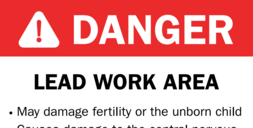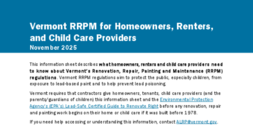


Act now. Be lead safe
Did you know?
Why RRPM regulations are required in Vermont

Lead is a toxic metal that was commonly used in house paint until 1978. About 60% of Vermont homes were built before then.

Lead-based paint includes any paint, coating, stain or seal made before 1978. Lead-based paint becomes hazardous when it's disturbed, which creates dust that can be breathed in or swallowed. This exposure can cause lead poisoning and permanent health effects. Lead is especially harmful to children and anyone who is pregnant. Learn more about lead poisoning

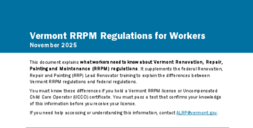
Because lead is hazardous, workers must be trained and licensed to use lead-safe practices when working on painted surfaces in buildings built before 1978. The Health Department oversees compliance with the Vermont Renovation, Repair, Painting and Maintenance (RRPM) regulations and licenses individuals and businesses that perform RRPM work.
What You Need to Know About RRPM Regulations

What type of work falls under the RRPM regulations?

The RRPM regulations require workers to be licensed and follow certain lead-safe work practices to minimize the spread of lead-based paint chips and dust, which can cause lead poisoning. 

The RRPM regulations apply to:

  • All housing and child-occupied facilities built before 1978.
  • Anyone who does work on these buildings over the RRPM thresholds listed below.
    • This includes contractors, painters, carpenters, plumbers, electricians, weatherization or window replacement contractors, property managers, landlords, and child care providers who perform their own work.
    • Window replacements are always RRPM jobs, no matter how small the window.
    • Demolition of painted surface areas is considered RRPM work. 

Under Vermont law, it is assumed that lead-based paint – including any paint, coating, stain or seal – is present in all housing and child-occupied facilities built before 1978. Vermont does not allow hardware store lead test kits to verify if lead is absent. Filing an exemption with the Health Department is the only way to verify if a building is lead-free and to do RRPM work without following the requirements.

RRPM Thresholds

Lead-Safe RRPM licenses are required for work done on painted surfaces that is above these thresholds:

  • Interior threshold for all housing and child-occupied facilities built before 1978: 1 square foot per interior room
  • Exterior threshold for rental housing and child care facilities built before 1978: 1 square foot per exterior side of the building
  • Exterior threshold for all other buildings built before 1978 (including housing and child-occupied facilities): 20 square feet per exterior side of the building
What are the requirements for rental housing built before 1978?

For rental housing, Lead-Safe RRPM licenses are required for work that will disturb more than:

  • 1 square foot per interior room
  • 1 square foot per exterior surface

If you are a landlord, this means that you must have the Lead-Safe RRPM Firm – Landlord license if you are working on your own rental property and are not supervising other workers. If you are supervising other workers or are working on properties you don't own, then you need both the Lead-Safe RRPM Supervisor and RRPM Firm licenses. Learn more about which license you need

If you are a renter, make sure the work being done on your home follows the law by learning about what to ask and what to look for before the work starts. If you have concerns, please submit a complaint, and we will look into it. 

What are the requirements for child-occupied facilities built before 1978?

Child-occupied facilities include preschools and kindergarten classrooms (see the full definition of a child-occupied facility). Only the portion of the building (inside or outside) that the children routinely use must meet the RRPM regulations. 

In child-occupied facilities, Lead-Safe RRPM licenses are required for work that will disturb more than:

  • 1 square foot per interior room
  • 20 square feet per exterior surface

Child Care Facilities

In child care facilities, Lead-Safe RRPM licenses or an Uncompensated Child Care Operator (UCCO) certificate is required for work that will disturb more than:

  • 1 square foot per interior room
  • 1 square foot per exterior surface

If you are a child care provider, you may apply for a UCCO certificate if you will be working on your own child care. The certification is free. You do not need a Lead-Safe RRPM Firm or Supervisor license with this certification. The certification does not allow you to do RRPM work for hire, train or supervise other workers. 

I'm a homeowner or a renter. What do I need to know?

If your home was built before 1978, Lead-Safe RRPM licenses are required for contractors and landlords doing work on your home that will disturb more than: 

  • 1 square foot per interior room
  • For homeowners: 20 square feet per exterior side of the building
  • For rental housing: 1 square foot per exterior side of the building 

For your safety, you may choose to have the workers use lead-safe work practices even if the area is smaller than these requirements. Look up Vermont-licensed Lead-Safe RRPM Firms 

If you are a homeowner and doing work on your home, you do not need a Lead-Safe RRPM license. However, you may want to take the 8-hour Initial RRP training to learn lead-safe work practices.

What to ask, what to look for, and how to report a concern

Follow these steps to make sure they are performing the work properly:

Step 1: Confirm that the contractor or your landlord is licensed.
  • If a contractor is doing the work, ask for a copy of both the Lead-Safe RRPM Supervisor and RRPM Firm licenses.
  • If your landlord is doing the work, ask to see their Lead-Safe RRPM Firm – Landlord license.
  • Look up their licenses to make sure they are current. 

Before hiring a contractor, it is a good idea to confirm and specify in the work contract that they have the correct Lead-Safe RRPM licenses and will use lead-safe work practices.

Step 2: Make sure you receive educational materials before the work begins.

Licensed Lead-Safe RRPM Firms and Landlords are required to give you a copy of these materials within 60 days before work starts:

Step 3: Observe to make sure they are following lead-safe work practices.

Individuals doing RRPM work are required to use lead-safe work practices to make sure lead dust and debris are contained. Some work practices generate so much lead dust that they are not allowed under federal and state regulations. 

Workers must follow these lead-safe work practices:

  • Use plastic sheets to contain the work areas by:
    • Covering the floors and any furniture that cannot be moved and secure the plastic with tape.
    • Sealing off doors and heating and cooling system vents.
    • For exterior work, covering the ground. In some cases, there may need to be extra precautions to contain the work area (for example, putting up vertical containment).
  • Put up warning signs that alert others to potential lead hazards.
  • Mist all surfaces before disturbing them to reduce the spread of dust (also called working wet).
  • Never use power tools without an RRPM Power Tool permit issued by the Health Department and dust control attachments.
  • Clean up and close off the work area daily.
  • Clean up all work areas before taking down the plastic sheets when the work has been completed.
    • Exterior work areas must be properly cleared of visible paint chips and debris.
    • Interior work areas must be deep cleaned by first using a HEPA vacuum on all surfaces, followed by wet-wiping and wet-mopping with detergent and rinse water.
    • When the final cleaning is done, there should be no dust, paint chips or debris in the work area.  
    • The supervisor must perform a cleaning verification procedure to ensure the cleaning was done properly. If the work area has been adequately cleaned, a clean wet disposable cloth (like a Swiffer) should not pick up any signs of dirt when run along the walls, windowsills, or floors of the work area. 

These work practices are prohibited

  • Open flame burning or torching
  • Dry scraping or sanding
  • Using power tools (such as sanding, grinding, planing, needle gunning, or abrasive blasting or sandblasting), unless the worker has received an RRPM Power Tool Permit from the Asbestos and Lead Regulatory Program
  • Using a heat gun at temperatures greater than 1100°F
  • Hydro-blasting or high-pressure washing
  • Chemical stripping

If you see workers using any of these prohibited work practices, please immediately fill out this online form.

Step 4: Reach out if you see something that does not seem right.

If you are concerned that contractors or your landlord do not have the RRPM licenses or are not using lead-safe work practices in your home, first reach out to them or their company to ask them to correct the issue(s). 

If you still have concerns, the company or landlord will not cooperate, or if you see them using prohibited work practices, fill out this online form to alert the Health Department as soon as possible.

  • Please complete the form as soon as you notice a concern, so we can respond quickly.
  • Email pictures to [email protected] in addition to completing the form, if possible. 
  • Include the contractor’s name or business name if you know it. 
  • You do not need to be the person who hired the workers to contact us. 
  • Anyone can notify us of any concerns they see related to unsafe work practices. 
Which type of license or certificate do I need?

There are three types of Lead-Safe RRPM licenses. If you are a child care provider, you can apply for a UCCO certificate.

Learn more about the RRPM licenses and UCCO certificate

How do I become RRPM licensed or UCCO certified?

Training is required before you can apply for the Lead-Safe RRPM licenses or the UCCO certificate.

Find out which training you need

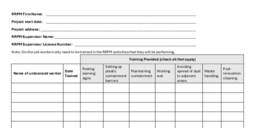
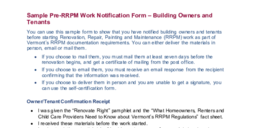
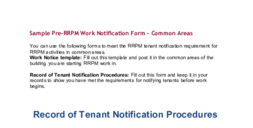
RRPM Checklists and Templates

Use these checklists and templates to make sure you meet RRPM requirements for job site activities and documentation. 

Contact Us

Asbestos and Lead Regulatory Program

Email: [email protected]

Last Updated: