This page highlights your Health Department's work behind the scenes and in the field by showing how public health benefits entire communities by supporting the mental, physical, and social well-being of everyone in Vermont.
This page highlights your Health Department's work behind the scenes and in the field by showing how public health benefits entire communities by supporting the mental, physical, and social well-being of everyone in Vermont.

Sign up for our newsletter, Vermont Public Health in Focus. It highlights the work of your Health Department and the people behind it. Each new issue dives into current public health topics and shares insights.
July 2026
You’ve probably heard something by now about foodborne illness outbreaks sweeping the U.S. that cause “explosive diarrhea” and other symptoms we’d all rather avoid. These outbreaks are caused by the parasite Cyclospora, which spreads through food or water contaminated by human feces (poop). It does not spread from person to person.
The Food and Drug Administration (FDA) is currently tracking four separate outbreaks of Cyclospora in the U.S. The largest outbreak has been linked to iceberg lettuce served at Taco Bell locations in five states. The sources of the three smaller outbreaks have not yet been identified. No cases connected to the current outbreaks have been reported in Vermont at this time.
The Health Department works year-round to test for, track, and contain foodborne illnesses. Working together and sharing data helps public health workers identify outbreaks, find the source of contamination, and prevent more people from getting sick.
When someone in Vermont tests positive for certain foodborne illnesses, their test results are reported to the Health Department. For some foodborne illnesses, our Public Health Lab staff analyze test samples to determine if they are connected to other cases. Meanwhile, our Epidemiology staff interview the person who became sick to learn more about their symptoms and recent food exposures.
While the national news may sound alarming, cyclosporiasis cases are rare in Vermont, and the small number reported each year is most often linked to international travel. The most common foodborne illnesses in Vermont are caused by Campylobacter, Salmonella and norovirus.
You can lower your risk of foodborne illness by following these everyday food safety practices:
Learn more about foodborne and diarrheal illnesses
Explore the new Infectious Disease Data Explorer

We sat down with Dr. Cahill, PhD, who leads the Vermont Department of Health Enteric and Foodborne Epidemiology Program, to get answers to your most frequently asked questions about cyclosporiasis.
If you are experiencing symptoms like frequent watery diarrhea, loss of appetite, stomach cramps, and nausea, contact your health care provider. They may recommend testing.
Fresh fruits and vegetables are an important part of a healthy diet. Whether produce comes from your own garden, a local farm, or a grocery store, always wash it under clean, running water before eating, cutting, or cooking. Washing helps remove dirt and some germs, although it cannot eliminate all possible contamination.
Public health officials are continuing to investigate the current outbreaks, and recommendations may change if additional information becomes available.
No, just clean, running water. For firm produce, like cucumbers, melons, potatoes, and carrots, you can use a clean produce brush while rinsing. Do not use soap, detergent, bleach, or commercial produce washes. These products aren’t recommended and can leave residues that are not intended to be eaten.
May 2026
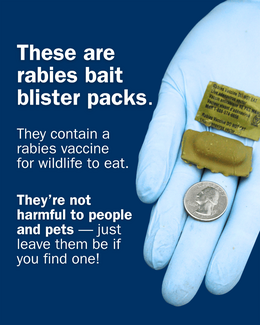
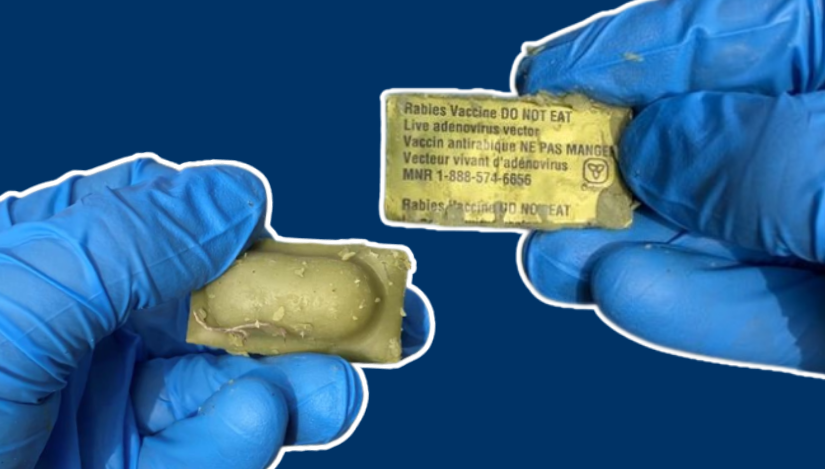
Over the next few weeks, small packets (that look a bit like ravioli) will start appearing in areas of Vermont. They’re part of the state’s rabies prevention effort.
The U.S. Department of Agriculture, working with the Vermont Departments of Health and Fish and Wildlife, is distributing rabies vaccine bait packs across parts of the state. The goal is simple: immunize wildlife, like raccoons and skunks, to slow the spread of rabies before it reaches people or pets.
This matters because rabies activity has been higher than usual.
“People don’t always realize how much goes into rabies prevention,” said Dr. Natalie Kwit, state public health veterinarian. “Our epidemiologists, lab staff, and communications team all play a role in making sure we can respond quickly and keep people informed.”
Rabies is almost always fatal once symptoms begin, but it’s preventable if treated promptly after an exposure. Getting the response right every time is critical.
You may also be hearing about changes at the CDC (Centers for Disease Control and Prevention). In recent months, the federal rabies program has lost staff and access to expert consultation isn’t as consistent as it once was.
For Vermont, our work hasn’t changed. But the federal changes make our strong state and local coordination even more important.
Rabies cases are higher than usual, and Vermont is actively working to reduce the spread, including vaccinating wildlife. Avoid wild animals, report unusual behavior, and keep pets up to date with annual rabies vaccines.
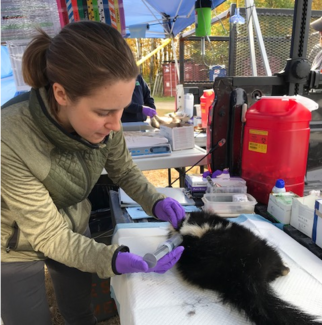
This article was written in collaboration with State Public Health Veterinarian at the Health Department, Dr. Natalie Kwit, DVM, MPH, DACVPM.
Dr.Kwit leads the Zoonotic and Vector-Borne Disease Programs and enjoys spending time outside with her family, watching horror movies, cooking and singing karaoke.
Take a look at these older stories about the Vermont Department of Health and the people who make our work possible. While these stories may be from the past, they offer a look into the work we do every day to help keep Vermonters healthy.
| TITLE | DATE |
|---|---|
| 03/26 | |
Public Health: The Wingman You Didn't Know You Had & The Food Pyramid Amid Food Access in Vermont | 02/2026 |
| 01/2026 | |
| 12/2025 | |
| 11/2025 | |
Drought and Drying Wells & The Harms of False Claims about Health | 10/2025 |
| 09/2025 |