Food and Feeding

Breastfeeding Information for New Mothers

Breastfeeding, the key to the good health of mothers and babies, also significantly benefits families, employers, and society. For these reasons, the American Academy of Pediatrics recommends that babies be breastfed for the first full year of life.

Learning to Breastfeed

Breastfeeding is Natural Feeding

Breast milk has all the nutrients your baby needs. It’s fresh, clean, always ready at the right temperature, and it costs less than formula. Breast milk is more easily digested than formula; it protects against diarrhea and infections; and babies usually aren’t allergic to it.

Nursing will give you a special closeness with your baby, and may help burn off the extra weight gained during pregnancy.

Consider breastfeeding. Talk it over with people who are important to you—you’ll need their support. Ask other women about their experience. Watch someone breastfeed. Discuss your questions and concerns with your nutritionist, public health nurse, childbirth educator, midwife, or physician. They can help you find an information class or support group in your area.

Return to Top

Breast Changes During Pregnancy

The size of your breasts is determined mainly by the amount of fatty tissue they contain. It doesn’t matter if your breasts are large or small, you can still nurse your baby.

Hormonal changes in early pregnancy cause milk ducts to branch out, and the milk-producing cells, or alveoli, to increase in both size and number. This is why most women experience increased breast size and tenderness as one of the earliest signs of pregnancy.

Nipples and areola (the colored area surrounding the nipple) also increase in size and darken. The Montgomery glands—little bumps on the areola—begin to stand out and secrete an oil that cleans and moistens the nipple.

By the end of your first trimester, your breasts are ready for milk production (lactation). During pregnancy, your breasts produce a yellow liquid—rich in nutrients and antibodies—called colostrum, which will be baby’s first food. A few days after birth, your breasts, stimulated by baby’s sucking, will start making blue-white milk.

Breast Care

Because your nipples are naturally cleansed and lubricated by secretions from the Montgomery glands, plain water is enough to keep them clean. Use a damp cloth and soak off any bits of dried colostrums. Avoid using soap.

As your breasts grow larger and heavier during pregnancy, wear a well-fitted bra that gives good support. If needed, wear a soft absorbent liner in your bra. (Avoid plastic liners that keep air out and wetness in.) Old Sheets or diapers cut in large squares, or cotton handkerchiefs make inexpensive, reusable bra liners. Remove the liners when wet, wash and dry, or throw away.

If you think you have inverted or flat nipples, talk to your health care provider. She can recommend a breast cup to wear in your bra.

There is no evidence that special exercises like nipple rolling or rubbing with a wash cloth toughens nipples, and they may in fact irritate them.

Return to Top

The First Feeding

Plan to breastfeed as soon after birth as possible. (While you’re still pregnant, tell your doctor or midwife that you want to do this so the delivery room staff are prepared for your request.)

Before you start feeding, get to know your baby. Take time to talk to him, touch him and look him over.

Don’t be afraid to ask for help. Breastfeeding doesn’t always come naturally. You and your baby are beginners, and no one expects you to be an expert from the start. The hospital staff can show you how to start nursing comfortably.

Babies are born with a “sucking reflex,” but they must learn to nurse. Some babies may be sleepy at first. Others may fail to grasp the nipple or fail to suck. Some babies, especially preemies, may have trouble coordinating the suck-swallow-breathe pattern.

When you’re ready to nurse

Hold baby “tummy to tummy.” Touch your nipple to baby’s lower lip. He’ll naturally turn toward the touch and open his mouth. Be sure his mouth is wide open. Holding your breast with thumb on top and other fingers below, quickly guide your nipple and most of the areola into his mouth. Make sure he is not just sucking on your nipple—this can cause soreness.

His suck should feel strong and you may feel some discomfort in the beginning. This discomfort should not last more than two or three weeks.

Give baby breathing space

If his nose is pressed against your breast, try adjusting the baby’s position by pulling his bottom in toward you. Be sure not to press on your breast with finger or thumb or you may block the flow of milk.

To end the feeding

Or to change his position, break suction by putting your little finger in the corner of his mouth between his gums, or by tugging gently on his chin. Pulling your nipple away without breaking his suck will cause him to suck even harder, which can lead to sore nipples. Burp baby after each breast.

Return to Top

The Nursing Routine

The following information will help you and your baby establish a good nursing routine during the first few weeks.

Find a comfortable nursing position

LYING DOWN: Many women find this the most comfortable position for the first week or two after birth. Lie on your side (pillows at your back provide support), hold baby with lower arm to keep her from rolling, and feed from breast closer to the bed.

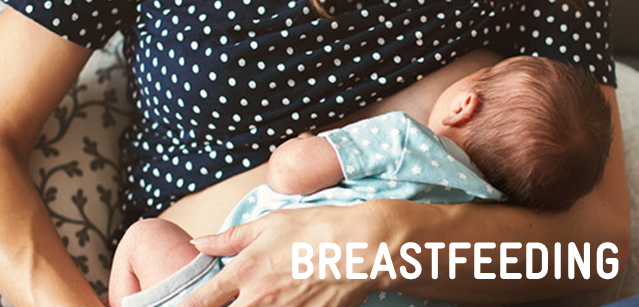
SITTING UP: Choose a comfortable arm chair (rockers are great), put a pillow in your lap to lift baby up, and rest her head in the crook of your elbow, her belly against your lower chest. You may be more comfortable with your feet on a footstool or low table.

THE CLUTCH HOLD: Women with larger breasts, or those who have had a cesarean delivery, have found this hold most comfortable. Place baby’s bottom near your elbow, back resting on your arm, head in your hand. (Baby should be supported well up on your breast, not hanging down from it.) On those rare occasions when baby refuses to take a particular breast, using the clutch hold can fool her into thinking this is the favored breast.

The ‘let down reflex’

Your baby is helped to get milk from your breast by the “let down reflex.” Her sucking stimulates muscles around the alveoli (the milk-producing cells) to contract. For many women, this will feel like a tingling, or “pins and needles” feeling in their breasts. Some women let down or leak milk at the very sight or thought of their baby. Let-down occurs in both breasts at the same time, so while nursing on one breast, you may leak from the other. Pressing the palm of your hand or forearm against your nipple will stop milk from leaking. You will know you have let down your milk with your baby begins to suck and swallow more slowly.

Choking

During nursing, milk flows from your nipple in 15-20 separate streams. Some newborns have trouble keeping up with all that milk. They swallow rapidly, begin to choke, and pull away from the breast to catch their breath. It may take several weeks for baby to learn to manage your milk flow. Don’t worry; she will.

Burp baby after each breast

Bring baby to upright position so swallowed air will come to the top of her stomach. Hold her on your shoulder or sit her on your lap. Gently stroke her back in an upward motion. If she does not burp within a minute she may not have a bubble. You can stop burping.

Breast care after nursing

Take a few minutes to air dry your nipples. Don’t dry with a towel or a cloth. Most women experience some nipple tenderness for a week or two. If discomfort seems to be getting worse, call your health care provider or breastfeeding support group for advice. Soreness can be prevented. See “Breastfeeding Difficulties” for relief measures.

Alternate the breast you start with

Baby sucks hardest on the first breast, when she’s hungriest. As her stomach fills, sucking is less vigorous, and the second breast is not as stimulated to make milk as the first. To be sure each breast will produce a good milk supply, start each nursing session with the last breast used. HINT: Place a safety pin on the bra side you will start with at the next feeding.

‘After pains’

When you first start breastfeeding, you may have uncomfortable cramping in your lower abdomen. These “after pains” prevent too much blood loss and shrink the uterus quickly. All women experience contractions or cramping of the uterus following birth, but because nursing stimulates the hormones that cause contractions, women who breastfeed usually have stronger after pains (and their uterus grows back to pre-pregnancy size more quickly) than those who don’t. After pains will gradually ease and stop altogether about a week after baby’s birth.

Return to Top

Baby’s Early Days at Home

Feedings take time

A newborn feeding, with burping and diaper changing, may take an hour. By the time baby is two or three months old, feeding time may be only 10 to 15 minutes. These longer, early feedings are an important time to be together, giving your baby a healthy start both physically and emotionally.

Count feedings

Newborns will typically nurse eight to 12 times in 24 hours. The time between feedings will probably be irregular, with one long sleep period, balanced by frequent feedings during awake times. During fretting or “social hours” (usually late afternoon and early evening) he may nurse quite often before settling into the night’s sleep.

Nurse often (every two to three hours at first) to help build and keep up your milk supply, and relieve overfull breasts.

Frequent feedings

If your baby averages less than eight feedings a day; weighed less than six pounds at birth; or prefers sleeping for four or five hours at a time, you may need to wake him to feed him. Don’t let him go more than three hours without a feeding during the first two to three weeks. During the next four to six weeks, if he continues to be a sleeper and gains weight slowly, wake him after five hours. Ask your health care provider for guidance.

If baby doesn’t want to wake up for a feeding, try various ways to gently wake him: unwrap him, tickle his toes, rub his back, blow very gently in his face, put a cool, wet cloth on his forehead, stroke the skin around his mouth, or start feeding by expressing a little milk on his lips.

Setting the mood

Babies prefer peace and quite at mealtime. Try to create a calm setting for nursing. If you feel anxious or upset at feeding time, have a relaxing drink of warm milk, decaffeinated tea or juice, and lie down to nurse. Turn on the TV or radio if it helps to relax you. If your muscles are tense, cover the arm holding baby with a pillow or thick blanket so he won’t feel your tension. If it’s time for a feeding and baby begins to waken, start nursing before he becomes upset. It’s easier to get him on the breast if he’s awake and calm, not screaming. Wait to change his diapers until the middle or end of the feeding.

Baby’s cues

If your baby cries within half an hour after feeding, don’t assume that he didn’t get enough to eat. Crying doesn’t always mean hunger. He may have overeaten, and now feels uncomfortably full. Crying communicates many needs—for affection, relief from boredom, over-stimulation or discomfort (gas, wet diapers, tight clothing, too hot, too cold—as well as hunger).

Sucking on fingers and hands does not always mean hunger. Babies need and enjoy sucking—let them do it.

Night feedings

Night feeding should be all business: feed, burp, change of diapers (if needed), and return to bed. Let baby know this is not a play time; you need your rest.

Bowel movements

Breast milk stools are loose and odorless, green to mustard colored, and may cause baby to strain or grunt. Newborns often have a bowel movement after each feeding. There may be just a yellow stain on the diaper, or the diaper may be filled. After a few months, some breastfeed babies may go five to seven days without any stools, and then have a very large one. Your baby will set his own pattern.

Return to Top

As Baby Grows

Is your baby getting enough milk?

Let your doctor do the weighing. You look for other signs: six or more wet diapers a day; two to five bowel movements a day; frequent, intense nursing; arms and legs filling out, growing into and then out of sleepers. No two babies grow exactly alike, even within the same family. Large or small, if you baby grows steadily, she’s probably growing well.

Supply and demand

The more often baby nurses, the more milk you will produce. If you skip a feeding entirely, you will have less milk at that feeding 24 hours later. If you’re stressed or overly tired, you many also produce less milk. If this happens, let baby nurse more often to restore your supply.

‘Ten day-itis’ and growth spurts

At about 10 days to two weeks after birth, your baby may suddenly become more fussy. She is forcing an increase in your milk supply by wanting to feed more often. It may seem that you don’t have enough milk to satisfy her. Don’t give formula, or you’ll interfere with nature’s way of increasing your milk supply. Instead, nurse more often, get extra rest if you can, and wait it out. Within 24-36 hours your baby will settle back to nursing less often, and you will be making more milk for each feeding.

These “growth spurts” also occur at about five to six weeks and again at about three months. Treatment is always the same: nurse often, rest, and avoid the temptation to offer a bottle.

Bottlefeeding

Giving solid foods or offering a bottle too often will decrease the amount of milk you make. After your milk supply is well established (at about four to six weeks) you may give a bottle of breast milk or formula once in a while without affecting your supply. Consult with your health care provider before starting solids. Most babies don’t need solid foods until they are about four to six months old. As these foods are added to baby’s diet, she will probably take less milk.

Biting

As baby grows, she will begin to teethe. If she clamps down on your nipple while nursing, stop the feeding and say “NO” in a firm voice. Being startled is an unpleasant experience and she will learn very quickly not to bite. Between feedings, offer a teether.

Your Early Days at Home

Take time for rest and relaxation. Stress and fatigue can decrease your milk supply, so learn to nap when baby naps. In the first few weeks, let the housework go and take care of yourself and your baby instead. Limit visitors, and learn to admit when you’re tired.

Your partner can be a big help, so discuss with him what he can do. Screening phone calls, walking the baby when he’s fussy, making meals are a few of the things dad can do to help.

If you feel stressed, try to figure out why and what you can do to change the situation. If it’s time for a feeding, take a hot shower, practice deep breathing and the relaxation exercises you learned for labor, have a warm drink, or do anything else you know will help you relax.

Even new and loving mothers need a change of scenery. Get out of the house once in a while; newborns are extremely portable. Babies are comforted by motion and the sounds of voices and heartbeats. An infant carrier allows baby to come along as you follow your daily routine.

If you need time alone, leave the baby with dad or a reliable sitter.

Eating right for breastfeeding is easy

Eat a variety of foods from the food pyramid, which includes: dairy, protein, fruits, vegetables, breads and grains. You needn’t avoid any nutritious foods unless your baby indicates you should. Drink according to your thirst. You don’t have to drink milk if you dislike it, but it’s an excellent source of the protein, calcium and fluids you need. If you don’t drink four glasses of milk daily, include other dairy products at each meal. Routine use of vitamin/mineral supplements is not recommended.

You can lose weight (one to two pounds a month) while nursing. With your health provider’s OK, begin exercising regularly to get back into shape.

Healthy habits

Just about everything you take into your body will pass into your breast milk, so avoid alcohol, nicotine, caffeine, medications, etc. while you are breastfeeding. If you need medication, let your doctor know you are breastfeeding so an appropriate one is chosen. If you smoke, quit—baby’s lungs will breathe a lot easier. And don’t let other people smoke around your baby.

Your changing feelings

Whether breastfeeding or not, some mothers feel extremely sensitive and moody due to changing hormones. Many women feel extreme pleasure or relaxation while nursing. This is due to hormones that control breastfeeding, and increased sensitivity of the nipple. Your sexual desire may be stronger or weaker than before, but these changes are temporary and will return to normal. Your partner may be unsure about how to respond to your feelings at this time. Your health care provider or public health nurse has information that will be helping in understanding and coping with the emotional and sexual changes you may experience.

Menstruation, ovulation & birth control

Many women don’t menstruate at all when breastfeeding; some women start their period within weeks of their baby’s birth.

Menstruation will not affect the quality of your breast milk, but your baby may be fussy for a day or two at the start of each period. The hormonal changes that cause your period may decrease your milk supply for a day or two. Let baby nurse more often to increase your supply. Some babies won’t nurse well at the start of each period. Don’t worry: when she’s hungry, her nursing will pick up again.

Breastfeeding is NOT a form of birth control. You may ovulate even through you’re not menstruating. Don’t take the fact that you have not had a period as a guarantee that you will not become pregnant again. Talk with your health care provider about the best type of birth control for you while you’re nursing.

Return to Top

Time Away From Baby

Plan ahead

The time will come when you must be apart from your baby; plan ahead for the separation. Many mothers start offering a bottle of breast milk, water or formula once or twice a week when their babies are four to six weeks old. (Water will interfere least with your breast milk).

Ensuring your milk supply

Whether baby drinks breast milk or formula while you are away, plan to breastfeed often when you are with baby to keep up your supply. Feed just before you leave and as soon as you return home. If you’re close enough, feed also during breaks or at lunch. On weekends or days at home, breastfeed often to restore your supply to its maximum.

If you will be apart on a regular basis (if you go back to work, for example), you can still continue breast and bottle feeding, either by expressing breast milk for missed feedings, or having someone else offer formula.

Practice expressing breast milk well in advance of your planned separation (see Expressing and Storing Breast Milk).

Have realistic expectations

You may not be able to combine long separations with giving your baby only breast milk. If you find your supply of milk is not meeting baby’s needs, or you can’t express your milk while you’re away, consider using iron-fortified formula. You will probably still be able to breastfeed when you are together, and your body will adjust to the lack of demand when you’re apart.

If you choose formula, and will be using it rarely, powered formula will be most economical since you can make up only as much as you need.

Return to Top

Expressing and Storing Breast Milk

Hand expression

With some practice, you may be able to collect enough breast milk without buying a pump.

To begin, wash your hands, massage your whole breast with three or four fingers (starting near your ribcage and working toward your areola), or place a warm, moist cloth on your breast for a minute; or do relaxation breathing while thinking of your baby.

Then, while holding the areola with thumb and forefinger, gently push back while squeezing fingers together. Don’t pull the nipple forward. Drip milk into a clean, sterile container. When drips stop, repeat the process, rotating thumb and forefinger “clockwise.”

Change breasts several times. At first you many not get much milk and the process may take nearly an hour, but with practice many women can hand express as quickly as using a pump.

Using a breast pump

There are many types of pumps and they come with a wide range of price tags. The cylinder (or trombone) types work well and are economical. To begin, use one of the relaxation techniques given for hand expressing. Follow manufacturer’s instructions for using the pump. Change breasts several times while pumping, and stop pumping when milk stops flowing.

Storing milk

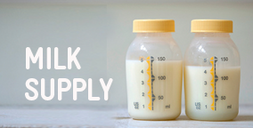
You can keep milk in the refrigerator for up to five days, in the refrigerator freezer for two weeks, and in a chest freezer for up to six months. As soon as your milk has been expressed, pour it into a clean plastic bag or sterile bottle and seal. Date the container and store immediately. You may add chilled milk to already frozen milk.

If you are expressing milk at work and you don’t have a refrigerator, bring a cooler filled with ice. Recent studies have shown that, if necessary, breast milk can safely be left at room temperature for up to six hours. The substances in breast milk that protect baby seem to slow bacterial growth as well. Milk should always be kept as cool as possible and away from sunlight.

Thawing frozen milk

Defrost frozen breast milk either in the refrigerator or by running luke-warm water over the bottle, or placing it in a pan of warm water. Shake often to speed up thawing and break up fat. Don’t thaw milk at room temperature or in the microwave. Throw out any unused milk after a feeding.

Return to Top

Weaning

Gradual weaning prevents discomfort for you and distress for your baby. Babies sometimes wean themselves when they begin eating solid foods or start drinking from a cup. Start by substituting a cup or bottle for the least-favored feeding. Wait a few days, then eliminate another nursing. Continue in this way until baby is fed entirely by cup or bottle. To avoid choking or tooth decay, never put baby to bed with a bottle.

Weaning directly to a cup has advantages. Baby drinks what she needs and you won’t have to wean again from bottle to cup. But she must be skilled enough to handle a cup very well. Most babies don’t drink well from a cup until they are about nine months old.

If you must wean all at once, watch your breasts carefully for signs of plugged ducts or mastitis. Call your health care provider at the first sign of a problem.

Return to Top

Breastfeeding Difficulties & Relief Measures

Engorgement

Your breasts may feel very full and tender a few days after delivery. Nurse frequently. If fullness makes it difficult for baby to grasp your nipple or if you are extremely uncomfortable, try the relief measures listed below. When engorgement is over, your breasts will be softer and smaller, but you will still be making plenty of milk.

Relief measures:

  • Before nursing, take a warm shower, soak your breast in warm water, or wrap in warm, wet towels for a few minutes.
  • Hand express or pump a little milk before a feeding

Plugged Duct

A red, sore, hot, tender or hard lump in one area of the breast could be a sign of a plugged duct.

Relief measures:

  • As soon as you notice a lump or tender spot, nurse more often on that breast. Apply warm compresses just before nursing. Gently massage the breast while nursing. Change baby’s position with each nursing. Get extra rest.

Breast Infection (Mastitis)

Mastitis has the same symptoms as a plugged duct, but also includes a fever and flu-like aches and pains. If treated right away, discomfort will usually go away within a day. Be sure to tell your provider you want to continue nursing. Your milk will not be affected by a breast infection.

Relief measures:

  • Continue to nurse, and use the relief measures given above for a plugged duct. Call your health care provider for further treatment. You may need to take a non-aspirin pain reliever for a few days, or antibiotics for a more serious infection.

Thrush

Sometimes babies develop a fungus infection in their mouth shortly after birth. If not treated, the infection can be passed to mother’s breasts. Thrush appears as white patches of skin in baby’s mouth or on mother’s nipples (not to be confused with the white coating of milk which appears in baby’s mouth right after a feeding).

Relief measures:

  • Call your physician if you suspect you see thrush. You or your baby may need medication.

Sore Nipples

If your nipples are sore at the end of a nursing period, have an experienced breastfeeding counselor (public health nurse, or nutritionist, La Leche League member, midwife, etc.) check to see that your baby is properly positioned at your breast and is “latching on” correctly (getting mouth and tongue in proper position for sucking).

Relief measures:

  • Increase the number of feedings per day; but cut down on nursing time.
  • Change baby’s position at each feeding. (Think of “round the clock” changes of position.)
  • Start nursing session on the less sore side. Once your nipple is no longer sore, alternate the breast you start with.
  • Express a few drops of breast milk and run on nipples after each feeding. (Milk seems to have healing properties.) Allow nipples to air dry.
  • If pain is severe, try taking plain non-aspirin pain reliever 20–30 minutes before nursing. But don’t depend on pain reliever; prolonged use may not be good for you or your baby.

Return to Top