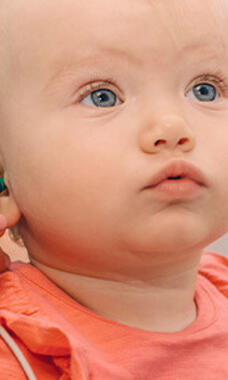
About Newborn Screening in Vermont
All babies born in Vermont have the opportunity to receive a newborn screening test to check for rare but serious diseases which may not be apparent at birth.
The Vermont Department of Health has put together this website to provide information about newborn screening, including frequently asked questions, information and resources for families and health care providers, and about the variety of programs which support families.
For more information, please contact our Newborn Screening Program.
- Frequently Asked Questions
- More Information
- Screened Conditions
- Newborn Screening Program Regulations
Frequently Asked Questions
What is Newborn Screening?
Newborn screening identifies conditions that can affect a child's long-term health or survival. Early detection, diagnosis, and intervention can prevent death or disability and enable children to reach their full potential.
Each year, millions of babies in the U.S. are routinely screened and are also tested for hearing loss prior to discharge from a hospital or birthing center. Screening is also available for babies born at home.
Why does my baby need newborn screening tests?
- Most babies are healthy when they are born.
- We test all babies because a few babies look healthy but have a rare health problem, which can be identified through screening.
- If we find problems early, we can help prevent developmental delays, serious health problems, or even death.
How will my baby be tested?
- Before you leave the hospital, a nurse will take a few drops of blood from your baby’s heel.
- The hospital will send the blood samples to a newborn screening lab.
- Babies born at home can have this done by their Certified Professional Midwife, in their health care provider's office, or at their local hospitals out-patient laboratory.
How will I get the test results?
- Parents are notified by their health professional of test results if there is a problem.
- Ask about results when you see your baby’s health professional.
Why do some babies need to be retested?
- Your baby will need to be retested if the screening is done before the baby is 24 hours old.
- Some babies need to be retested because there is a problem with the way the blood sample was taken.
- A few babies need to be retested because the first test showed a possible health problem.
- Your baby’s health professional or the Department of Health Newborn Screening Program will contact you if your baby needs to be retested. They will tell you why the baby needs to be retested and what to do next.
- If your baby needs to be retested, get it done right away.
- Make sure that your hospital and health professional have your correct address and phone number.
How are disorders treated?
Sometimes babies are found to have one of the rare disorders for which Vermont screens. If that happens, you and your baby's health care provider will be referred to a team of specialists.
These specialists will recommend a treatment plan, which may include a special diet, medication, or other types of treatment. They will work closely with your baby's health care provider.
More About Newborn Screening
Vermont screens for 29 different conditions which could result in serious health problems, developmental delays, or in rare instances, death, if not identified and treated early.
See also: Newborn Screening Program Regulations
How it works
At least twenty-four hours after birth, a nurse in the birth hospital will obtain drops of blood by pricking the baby’s heel. Babies born at home can have this done by their Certified Professional Midwife, in their primary care provider’s office, or at their local hospital out-patient laboratory.
These blood drops are placed on a special card (“filter paper”) which is sent to a laboratory for testing. If any of the tests indicate the possibility of a disorder, the baby’s care provider is notified immediately. Sometimes another filter paper is all that is needed to make sure there are no problems. Occasionally, a baby will need further tests to make sure everything is fine.
If a rare condition is found
If the baby does have one of the rare conditions, the parents, care provider, and specialists will work together to provide the baby with the care he or she needs. Vermont Children with Special Health Needs offers a variety of programs which support families in these efforts.
Making an informed choice about screening
Each year, a few parents choose to not have newborn screening done. These parents will be given information by their nurse, doctor, or midwife. It is extremely important that they understand the possible problems which could arise if a baby does have a condition which is not identified and treated early. The parents will be asked to sign a form saying that they understand this information but refuse to have their baby screened.
Screened Conditions
Vermont routinely screens newborns for 29 conditions. They are:
- 3-Methylcrotonyl-CoA carboxylase deficiency (3MCC)
- 3-OH 3-CH3 glutaric aciduria (HMG)
- Argininosuccinic acidemia (ASA)
- Beta-ketothiolase deficiency (BKT)
- Biotinidase deficiency (BIOT)
- Carnitine uptake defect (CUD)
- Citrullinemia (CIT)
- Congenital adrenal hyperplasia (CAH)
- Congenital hypothyroidism (HYPOTH)
- Cystic fibrosis (CF)
- Galactosemia (GALT)
- Glutaric acidemia type I (GA I)
- Hb S/Beta-thalassemia (Hb S/Th or Hb S/A)
- Hb S/C disease (Hb S/C)
- Hearing deficiency
- Homocystinuria (HCY)
- Isovaleric acidemia (IVA)
- Long-chain L-3-OH acyl-CoA dehydrogenase deficiency (LCHAD)
- Maple syrup urine disease (MSUD)
- Medium-chain acyl-CoA dehydrogenase deficiency (MCAD)
- Methylmalonic acidemia (Cbl A, B)
- Methylmalonic acidemia (mutase deficiency) (MUT)
- Multiple carboxylase deficiency (MCD)
- Phenylketonuria (PKU)
- Propionic acidemia (PROP)
- Sickle cell anemia (SCA)
- Trifunctional protein deficiency (TFP)
- Tyrosinemia type I (TYR I)
- Very long-chain acyl-CoA dehydrogenase deficiency (VLCAD)