Cyanobacteria
Blue-Green Algae Facts
- What is a blue-green algae bloom?
- Why be concerned about blue-green algae?
- Signs of a toxic bloom
- How can I tell if blue-green algae is present in a bloom?
- If there is an algae bloom, when will it go away?
- What if I see a bloom?
- What can I do about It?
What is a blue-green algae bloom?
Blue-green algae, or cyanobacteria, are an ancient group of algae. Although they are most closely related to other bacteria, they can photosynthesize like green plants. Blue-green algae reproduce rapidly in lakes and ponds with adequate amounts of sunlight, air/water temperature and nutrients like phosphorus and nitrogen.
Within a few days a clear lake or pond can become cloudy with algae growth. This is called a bloom. Although blue-green algae blooms can create nuisance conditions and undesirable water quality, most blooms are not toxic.
Why be concerned about blue-green algae?
Some kinds of blue-green algae produce natural toxins or poisons. When these algae die and break down, toxins can be released into the water. If animals ingest the toxin, they can be quickly paralyzed and die. Signs of poisoning include weakness, staggering, difficulty breathing, convulsions and death.
During the summer of 1999, the death of two dogs was attributed to blue-green algae poisoning after drinking large amounts of contaminated water directly from Lake Champlain.
Signs of a toxic bloom may include
- large numbers of dead fish, waterfowl or other animals.
- sudden, unexplained sickness or death of a cat or dog.
- a skin rash on humans after being in the water.
How can I tell if blue-green algae is present in a bloom?
Blue-green algae blooms may look like:
- thick pea soup
- green paint
- appear a different color such as bluish, brownish or reddish green
When a blue-green algae bloom washes up on shore, it can form a thick mat or a foam on the beach.
Blue-green algae is made up of extremely small organisms that are hard to pick up and hold. In contrast, if you pick up algae and it is stringy, made up of long bright grass-green strands that feel either slimy or cottony, it is not blue-green algae, but harmless green algae.
If there is an algae bloom, when will it go away?
Generally, cooler weather, rainfall, and reduced sunshine will lead to the breakup of an algal bloom. Some blooms die off after a few weeks, while others persist for a few months, depending on the conditions.
What if I see a bloom?
For much of the year, Lake Champlain is safe to swim in, but it is important to be aware of algae blooms. Blue-green algae blooms usually don’t happen until late summer and fall, but can happen earlier in a dry, hot year.
If the water is clear and the shoreline is free from green or brown scum, the water is probably safe to swim in. If there is a heavy greenish scum on the water or shore:
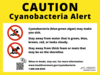
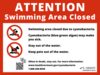
- avoid all contact with water containing the algae.
- keep pets and livestock away from the water.
- contact your local town health officer.
Laboratory tests of water samples can confirm whether or not a bloom is toxic.
What can I do about it?
Algae blooms are likely to occur during sunny, calm weather when high concentrations of nutrients are present in water. The two important nutrients that can cause a bloom are phosphorus and nitrogen, found in animal and human waste and fertilizers.
To help decrease nutrients flowing into streams, ponds and lakes:
- Don’t use more lawn fertilizers than the recommended amount, and keep fertilizers out of storm drains and off driveways and sidewalks.
- Maintain or plant native plants around shorelines and streams. Native plants don’t require fertilizers and help filter water.
- Properly care for and maintain your septic system.
- Do not allow livestock to drink or defecate in streams or lakes. Don’t overfeed waterfowl.
- Take steps to prevent soil erosion.